
Cosmetic dentistry and veneers
Ceramic veneers, inlays and aesthetic restorations for a harmonious, natural-looking smile, in a few sessions.
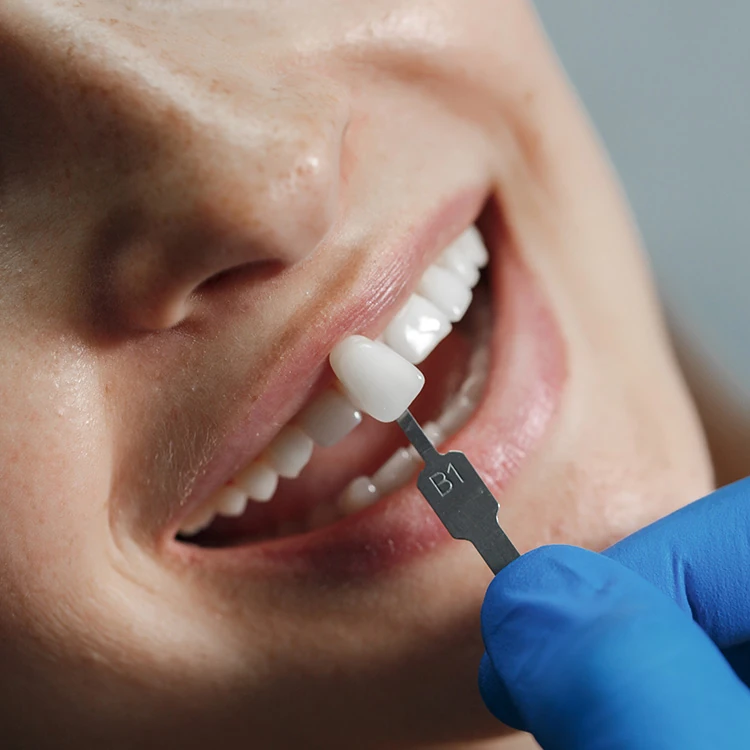
Cosmetic dentistry improves the color, shape and harmony of the smile with conservative treatments: ceramic veneers, inlays and aesthetic fillings. Veneers are thin shells applied to the front teeth to correct stains, small gaps (diastemas) or irregular shapes. We always start with healthy teeth and gums and with a design for your new smile that we agree on together.
What is cosmetic dentistry?
Cosmetic dentistry combines the function and the beauty of the smile, correcting the color, shape and proportions of the teeth with techniques that are as conservative as possible. The goal is not a "fake" smile, but a natural result, in harmony with your facial features.
Ceramic veneers
Veneers are thin ceramic shells (generally a few tenths of a millimeter thick, roughly 0.3–0.7 mm depending on the case) applied to the surface of the front teeth to correct discoloration, gaps (diastemas), minor shape irregularities or worn teeth. Tooth preparation is minimal and conservative and aims for a natural-looking result, thanks to the semi-translucency of the ceramic, which reproduces the look of enamel.
When veneers are the right choice
Veneers are indicated when the problem is mainly aesthetic: stains that do not respond to whitening, small gaps between the teeth, chipped edges or irregular shapes. A good candidate has healthy teeth and gums and enough enamel to support the veneer.
When they are not the right choice
If the tooth is severely compromised or has large restorations, a crown may be more appropriate. If the teeth are badly misaligned, orthodontics often makes sense first. In people who grind their teeth (bruxism), it is advisable to protect the result with a night guard. And in any case, cavities and gum problems must be treated first.
How we design your new smile
We design the smile together, starting from photographs and a preview of the result, so you can get a concrete idea before going ahead. Once the design is defined, the tooth is prepared, impressions are taken and the final veneers are applied, checking their shape and color.
Timelines and lifespan
Treatment is generally completed in a few sessions. With good hygiene and regular checkups, ceramic veneers last a long time; like any restoration, they may need maintenance or replacement over time. We discuss this with you clearly at the design stage.
Veneers, whitening or orthodontics?
Veneers are not always needed. If the problem is only the color, whitening is often enough; if the teeth are crooked, the basic solution is orthodontics; veneers address shape, gaps and stubborn stains. At the visit we compare the options and choose the most suitable and conservative one for you.
- Custom-made ceramic veneers
- Correction of discoloration, gaps and shape
- Conservative technique, natural result
- Preview of your smile before going ahead
- Aesthetic inlays and fillings
Frequently asked questions
Do veneers damage your teeth?
The preparation is minimal and conservative: only a thin layer of enamel is removed. Bear in mind, however, that this preparation, when performed, is generally irreversible: the enamel removed does not grow back and the tooth will remain covered by the veneer. That is why the goal is to preserve as much of the natural tooth as possible, assessing together the most suitable option for your case.
How long do ceramic veneers last?
With good hygiene and regular checkups they last a long time. Like any aesthetic restoration, they may need maintenance or replacement over time.
Is getting veneers painful?
It is a minimally invasive procedure that is generally well tolerated; when needed, it is performed under local anesthesia. Temporary sensitivity may occur in the following days.
What is the difference between a veneer and a crown?
A veneer covers only the front of the tooth and is very conservative; a crown covers the entire tooth and is indicated when the tooth is more compromised.
Can I choose the color?
Yes. Color and shape are defined together at the design stage, aiming for a natural result in harmony with the rest of your smile.